To do 10b
The LALG trailwalkers met again to continue our goal of walking the Hertfordshire Way, piece by piece. Our seventh leg of the Hertfordshire Way was on Tuesday 12 April. It was Leg 10b, as shown in the Friends of Hertfordshire Way guide, as we are going the “wrong way round” it goes from Hertford to Broxbourne
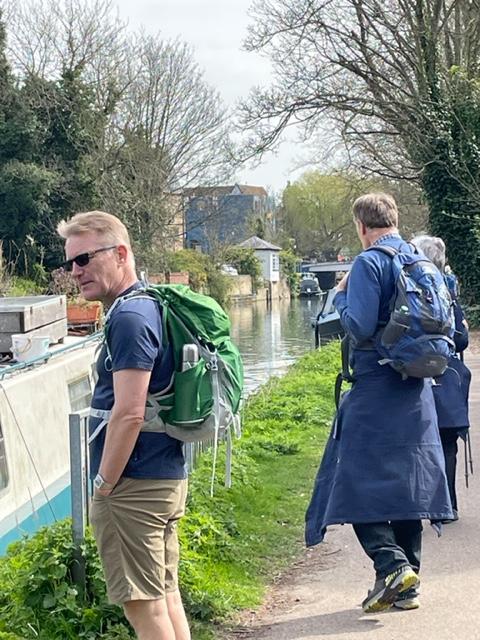
Chris as usual led the walk. We were trusting the weather gods would look upon us kindly, as there was the potential for rain, however it didn’t appear until we were within 5 minutes of completing the stage. It was a shorts day for some us!
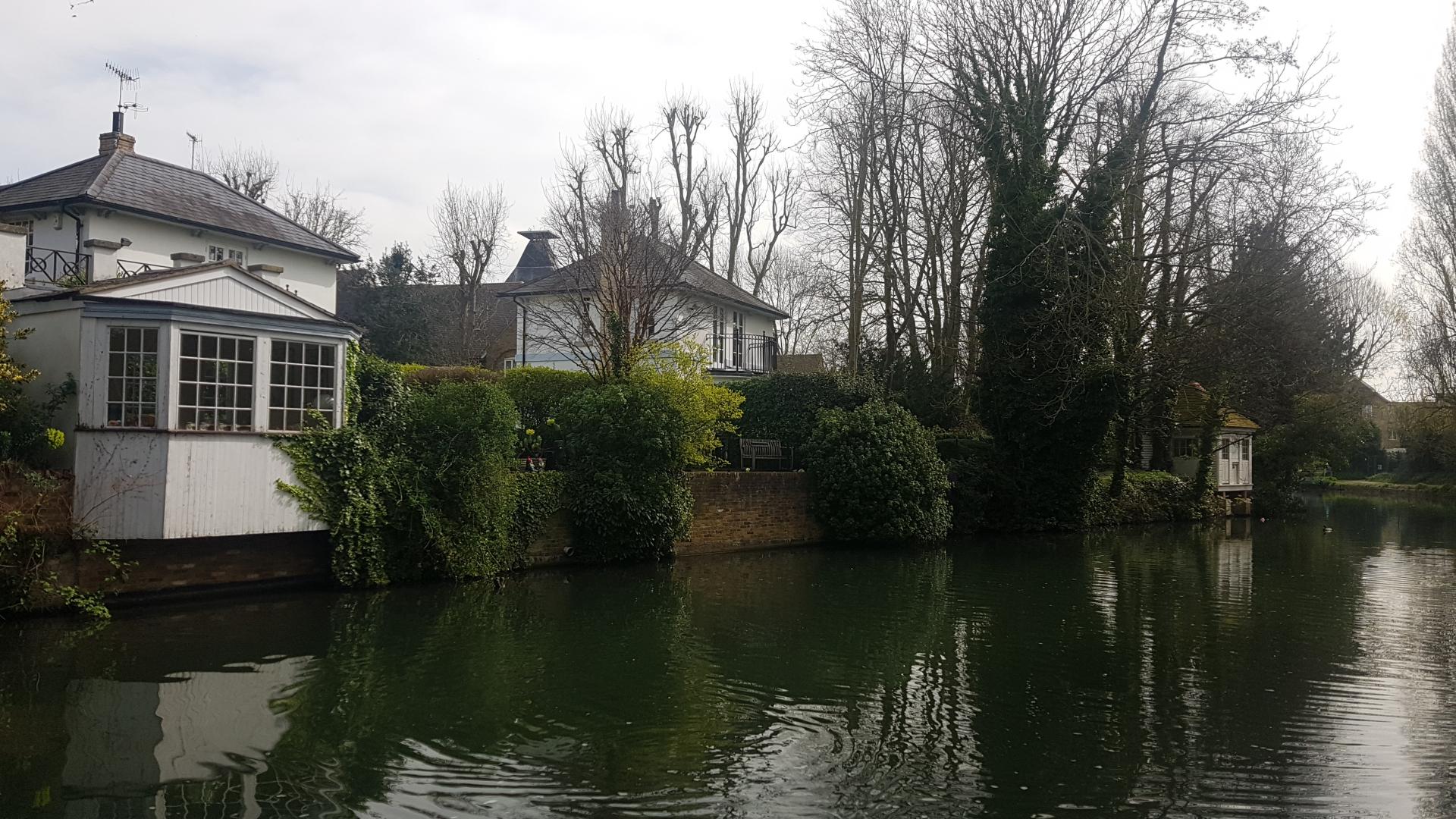
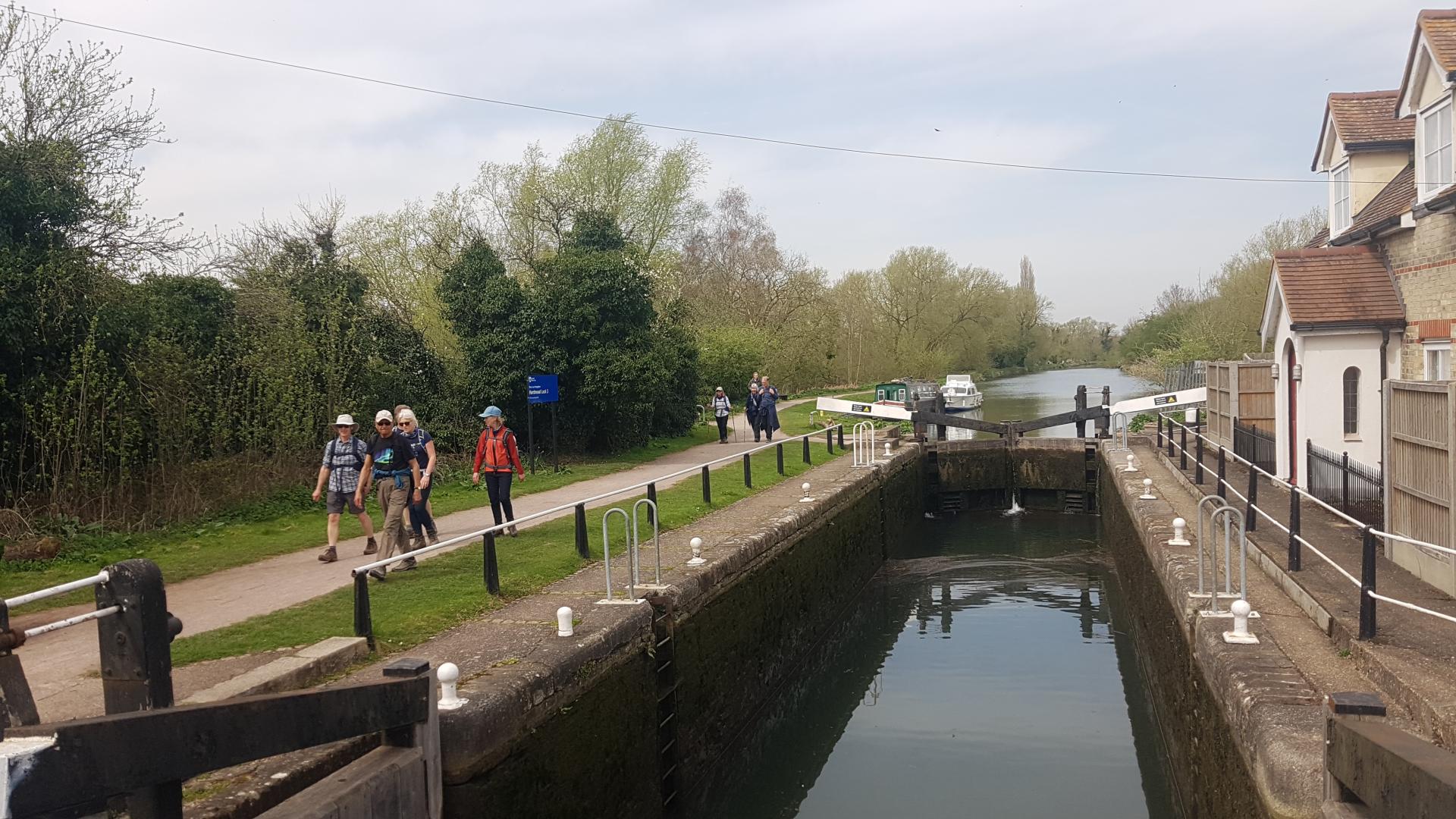
The route for today starts by crossing the River Beane, the River Rib, then tracks along the River Lea, walking along the towpath, (the River Lea was “canalised” to make it more navigable), chasing narrowboats on the way to Ware. Here we discovered a unique claim to fame. Nowhere else in Britain can you find so many gazebos along a single stretch of river. On a little post walk investigation, it seems that their origins can be traced back to their construction in the 18th and early 19th centuries. A rare few are thought to date from the late 1600s. They were apparently built by innkeepers and other owners of property on the high street as eccentric but peaceful places to meditate, paint and entertain guests to act as a haven from their busy lives in town. There is an information board showing that during the 1980s East Herts District Council, the Ware Society and other sponsors paid to restore them, they are remarkable and truly worth checking-out.
Some more research from “the web” points out that “the Lea Valley was for years the industrial centre of London and home to many inventions including the first monorail (horse drawn), the driving power behind the motorcycle industry, the great railway works, buses, guns, gunpowder, chemicals, shipbuilding and, after the invention of the diode in Ponders End in 1904, the UK’s first “silicon valley”.
Onwards along the river past Amwell Nature Reserve the reserve includes a mosaic of lakes, rivers, grasslands and woodlands. In 1991 six otters were released at the reserve and have bred, and now have moved to other sites in the county. The reserve, is also home to bitterns, great crested grebes and important numbers of wintering wildfowl. We saw some wildfowl, but no otters nor did we hear the booming call of the bittern.
Onwards again, to another change of scenery, through seemingly hundreds of rolling acres of arable land into the stunning Ash Valley. Back to the River, but this time the “New River“. The New River is an artificial waterway which opened in 1613 to supply London with fresh drinking water taken from the River Lea along with other springs and wells along its 20-mile course from Ware and Hertford to Stoke Newington. The New River relies on gravity to allow the water to flow carefully following the contours of the terrain from near Hertford into London, meaning it drops just five inches per mile. The New River, still supplies eight per cent of London’s water.
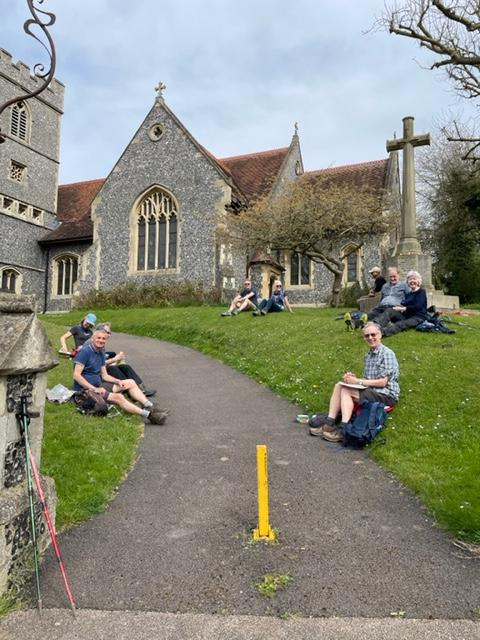
Then to Broxbourne, dashing through the April Showers to return to Letchworth, content with a fantastic day of walking in great company.
JB
Click on an image to show larger